Lipstick Packaging Compatibility Before Production
Lipstick packaging compatibility is a system test: formula, bullet, mechanism, cap and decoration meet during storage, shipping and daily use. Approve the complete combination rather than assuming that a visually correct component will behave well with the finished product.
Key takeaways
- Test the production-intent formula in the exact component code.
- Measure twist, bullet movement, cap retention and surface changes.
- Include hot, cold and transport conditions relevant to distribution.
- Link compatibility findings to controlled formula and pack revisions.
What does compatibility mean for a lipstick?
Compatibility includes whether the bullet fits and moves, whether the formula changes against component materials, whether decoration remains intact and whether the cap stays secure. A pack can pass a visual review and still fail when a warm bullet softens or a mechanism tilts.
List the user's actions: open, twist, apply, retract and close. Test the repeated sequence rather than one display-ready opening. Cosmetic packaging is part of the product experience, not a shipping shell added after formulation.
Which parts should be identified before testing?
Record formula revision, bullet dimensions, component supplier and code, resin or contact material information, decoration, cap and assembly setting. If any identifier is missing, the result may not apply to the parts later purchased.
Yunmei's lipstick page describes a process from formulation determination to sample preparation and supports fine-tuning fragrance, texture, skin feel and efficacy. Link those formula revisions to the specific packaging sample under test.
What mechanical checks reveal early problems?
Measure twist force, bullet rise and return, wobble, breakage, cap retention and product transfer to the cap. Repeat a defined number of cycles and record whether behaviour changes. Avoid relying on 'feels fine' when two component samples differ.
A private label lipstick manufacturers brief should also include target fill and expected storage. Overfilling can create product contact where none was intended, while too little fill may change the user's reach or make the package appear incomplete.
| Component | Check | Record |
|---|---|---|
| Bullet/formula | Movement, sweating, breakage | Formula and batch code |
| Mechanism | Twist force, rise and return | Cycle count |
| Cap | Retention and transfer | Fit observation |
| Decoration | Rub, lift, colour change | Artwork revision |
| Carton | Protection and orientation | Pack-out condition |
How should temperature and transport be considered?
Use conditions appropriate to the distribution route and planned product. Check for sweating, deformation, fragrance shift, surface changes or mechanism binding after exposure. A test is meaningful only when the condition, duration and sample code are written down.
Transport simulation should match the risks the pack will face. Vibration, orientation and carton protection can affect a lipstick differently from a static shelf test. The supplier and brand should agree which checks are appropriate before launch claims are made.
Why does decoration belong in compatibility?
Print, foil, coating and labels can rub, lift or transfer during handling. Test the finished decoration through normal use and pack-out. A blank component can pass every mechanical check and still fail as the retail item the brand intends to sell.
Keep artwork version and component supplier linked. A replacement vendor may use a slightly different surface that changes adhesion, so a prior result should not be assumed to cover a new source.
What if a component issue appears after approval?
Stop and classify the change. A minor artwork adjustment may need visual review; a material or mechanism change can require repeat function or compatibility checks. The decision should name a reviewer and evidence required before manufacturing resumes.
Do not mix old and new components under one identifier. Physical samples, reports and purchase records should make it possible to tell which exact combination was accepted.
How does the pack fit the wider project route?
Yunmei publishes four to eight weeks for ODM using existing formulas and three to six months for OEM development. Packaging lead time can influence either route. Select a production-intent component early enough that formula and pack checks are not squeezed into the final approval days.
Confirm MOQ, tooling and component surplus with the quotation. A mechanically perfect component can still create an impractical first order if its minimum exceeds the brand's fill quantity by several times.
Worked example: component MOQ exposure
If the formula run is 1,000 units but a decorated component has a 3,000-piece minimum, 2,000 components remain unused after the first fill. At an illustrative $0.45 per component, surplus cash tied up is 2,000 × $0.45 = $900, before storage or obsolescence. Ask whether the excess can be used for a later run.
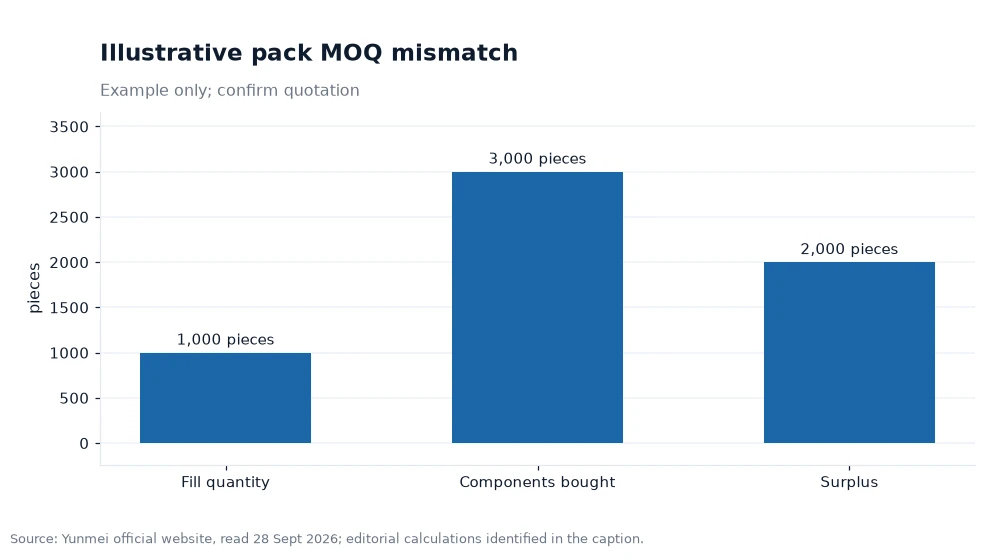
The chart prevents a common comparison error: cosmetic fill quantity and packaging purchase quantity are separate commitments. Model both before approving artwork or tooling.
Frequently asked questions
Can a generic tube prove lipstick compatibility?
No. Early screening can use a substitute, but release should use the exact formula, component, decoration and assembly intended for production.
Should the cap be tested separately from the mechanism?
Check both individual function and assembled behaviour. Cap fit, product transfer and mechanism movement interact during repeated use.
Who decides whether a component change needs retesting?
A named quality or technical reviewer should classify the change and specify evidence before purchasing or production proceeds.
Release the full component system
Tie the approved formula to the component code, decoration and assembly record. That gives the production team an objective reference when sourcing, filling and packing the commercial batch. A packaging risk register can classify each failure by severity, likelihood and detectability. A loose cap that causes leakage in transit deserves a different response from a minor decoration variation that remains within the approved standard. Define who can accept a deviation and what evidence is required. When a supplier proposes a substitute material, compare the technical specification and contact conditions before accepting it. Preserve failed components when practical; they can help an engineer reproduce the issue. Close each action only after the revised sample passes the agreed check. This process gives the brand a rational basis for repeating tests instead of rerunning every test automatically or skipping a necessary one. Before the project is closed, compare the approved record with the exact item being purchased. Check the version, quantity, component and evidence reference rather than relying on a remembered conversation. Ask the supplier to confirm any open assumption in writing, and save that confirmation with the quotation. If an answer changes the brief, update the sample and calendar before releasing the next commitment. This final reconciliation gives the brand a clear basis for later questions from production, quality or customer service. It also makes the next order easier to plan because the team can distinguish what was learned from what was merely assumed during the first launch. Keep a small sample set from each meaningful compatibility test, and label it with the condition and duration applied. When a concern appears, compare the exposed item with an unexposed control and photograph both under the same conditions. This makes the observation more useful to engineering and helps distinguish a real change from normal sample variation. Record the test equipment and calibration status when measurements are important. If the test is repeated, use the same method or explain what changed. The goal is a decision another reviewer can understand, not a collection of images without context. A sound evidence trail also helps purchasing verify that the commercial component still matches the tested one after a supplier or material change. Review Yunmei’s OEM/ODM manufacturing overview and use the same written brief for every sample round.
Yunmei's product and timing information was reviewed 28 Sept 2026. Component prices and minimums in the worked case are explicitly illustrative assumptions.[1].